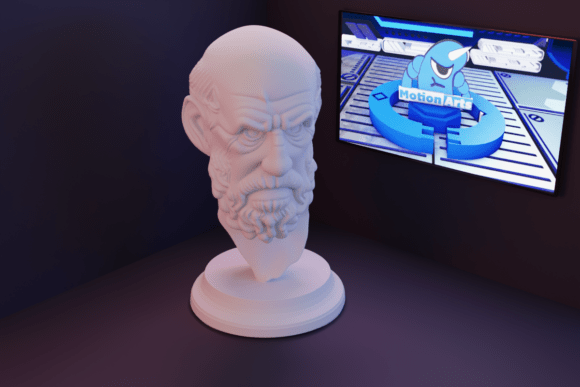
Hippocrates: Evaluating the 3D Printed Bust for Educational and Decorative Use
Hippocrates, widely recognized as the "Father of Medicine," remains a pivotal figure in the history of healthcare and ethical practice. For modern enthusiasts, historians, and medical professionals, owning a physical representation of this ancient scholar serves as more than mere decoration; it is a tangible connection to the roots of clinical ethics and scientific inquiry. The availability of high-quality STL files for 3D printing has democratized access to classical art, allowing individuals to produce detailed busts of Hippocrates for personal or professional spaces. This article evaluates the value proposition of acquiring and printing such a model, examining its aesthetic merit, practical applications, and the considerations involved in the production process.
The Significance of Hippocratic Imagery
The decision to display a bust of Hippocrates is often driven by a desire to embody the principles he championed: observation, rationality, and ethical responsibility. In medical offices, libraries, and academic settings, the image of Hippocrates acts as a visual anchor for these values. Unlike generic decorative items, a bust of this specific historical figure carries inherent symbolic weight. It signals a respect for tradition and an acknowledgment of the long lineage of medical practice. For healthcare professionals, it can serve as a daily reminder of the Hippocratic Oath, reinforcing the commitment to patient care and integrity. For students and academics, it provides a contextual artifact that bridges the gap between ancient history and modern science.
Evaluating the 3D Print Model
When considering a digital STL file for a Hippocrates bust, several design and technical factors influence the final outcome. The quality of the source model is paramount. A well-designed file will capture the serene and authoritative features traditionally associated with depictions of the ancient physician. Key elements to look for include detailed rendering of facial structures, hair texture, and drapery, which contribute to the overall realism and gravitas of the piece.
Design Fidelity and Aesthetic Appeal
The primary appeal of this specific STL file lies in its adherence to classical artistic traditions. The design aims to convey serenity and authority, traits essential to the persona of Hippocrates. High-resolution models ensure that these nuances are preserved during the printing process. For collectors of classical history, the accuracy of the portrayal is critical. A faithful reproduction allows the owner to appreciate the sculptural qualities that have defined representations of Hippocrates for centuries. This attention to detail makes the bust suitable not only for casual display but also for serious historical collections where authenticity of form is valued.
Versatility in Scale and Application
One of the significant advantages of digital 3D models is their scalability. Unlike fixed-size statues, an STL file can be adjusted to fit various spatial constraints without losing proportional integrity. This versatility allows users to print a small desktop ornament for a study room or a larger centerpiece for a library or office reception area. However, it is important to note that scaling affects print time and material usage. Larger prints require more filament or resin and longer production times, while smaller prints may demand higher printer resolution to maintain fine details. Users must balance their spatial needs with their technical capabilities and budget.
Practical Considerations for 3D Printing
Owning the STL file is only the first step; the actual production of the bust requires careful planning. Several technical and logistical factors should be considered before initiating the print job.
- Printer Technology: The choice between Fused Deposition Modeling (FDM) and Stereolithography (SLA) printers impacts the final result. SLA printers generally offer smoother surface finishes and finer detail, which is ideal for capturing the subtle features of a classical bust. FDM printers are more accessible and cost-effective but may require additional post-processing to remove layer lines.
- Material Selection: The choice of material affects both the durability and appearance of the bust. PLA is a common, eco-friendly option that is easy to print. For a more stone-like appearance, users might consider specialty filaments with marble or stone additives, or use resin with matte finishes. Post-processing techniques, such as sanding and painting, can further enhance the classical aesthetic.
- Support Structures: Complex geometries, such as the beard and hair of Hippocrates, often require support structures during printing. Proper orientation of the model on the print bed is crucial to minimize visible support marks and reduce post-print cleanup effort.
Who Should Consider This Model?
This 3D printable bust is particularly well-suited for specific audiences who value the intersection of art, history, and science.
- Healthcare Professionals: Doctors, nurses, and therapists may find that displaying a bust of Hippocrates enhances the professional atmosphere of their practice, fostering trust and conveying a sense of established expertise.
- Academics and Educators: History teachers, medical professors, and students can use the bust as a teaching aid or a focal point in lecture halls and study areas, stimulating discussion about the origins of medical ethics.
- History Enthusiasts and Collectors: Individuals with an interest in classical antiquity or the history of science will appreciate the opportunity to own a precise replica of a significant historical figure.
- 3D Printing Hobbyists: For those looking to challenge their skills with a complex, culturally significant model, this bust offers a rewarding project that results in a display-worthy item.
Alternatives and Tradeoffs
While 3D printing offers customization and immediacy, it is not the only option for acquiring a bust of Hippocrates. Pre-made resin or plaster statues are available from traditional retailers. These options eliminate the need for technical knowledge, equipment, and post-processing time. However, they often come at a higher cost per unit and offer less flexibility in terms of size and finish. Additionally, mass-produced items may lack the unique satisfaction of creating the object oneself.
Conversely, digital alternatives, such as high-resolution virtual models for augmented reality displays, offer a space-saving solution but lack the tactile presence of a physical object. The choice between a 3D printed bust and other formats depends on the user’s priorities: hands-on engagement and customization versus convenience and immediate availability.
Making the Decision
To determine if purchasing the Hippocrates STL file aligns with your goals, consider your intended use case and resources. If you have access to a 3D printer and enjoy the process of fabrication, this model provides a meaningful project with a dignified outcome. It is an investment in both cultural appreciation and technical skill development. If you seek a ready-made decorative item without the hassle of printing, traditional retail options may be more appropriate. Ultimately, the value of this STL file lies in its ability to transform digital data into a physical symbol of wisdom, bridging the ancient world with modern technology.
For those ready to integrate this piece of medical history into their environment, the process begins with securing a high-quality STL file. By carefully selecting materials and print settings, you can produce a bust that honors the legacy of Hippocrates while showcasing the capabilities of contemporary 3D printing technology.