Robot Dragon: Evaluating the Fusion of Fantasy and 3D Printable Mechanics
The intersection of organic mythology and industrial design has long been a staple of science fiction and fantasy art. However, translating this aesthetic into a tangible, physical object requires more than just conceptual appeal; it demands structural integrity, printability, and visual coherence. The Robot Dragon STL file represents a specific niche within the 3D printing community, offering a model that bridges the gap between legendary creature design and futuristic robotics. For creators, collectors, and hobbyists, understanding the practical value of this digital asset is essential before committing printer resources and material costs.
This analysis explores the characteristics of the Robot Dragon model, its suitability for various 3D printing technologies, and its potential applications in professional and personal projects. By examining the design details, compatibility, and end-use scenarios, we can determine whether this STL file aligns with your creative goals and technical capabilities.
Design Philosophy and Aesthetic Appeal
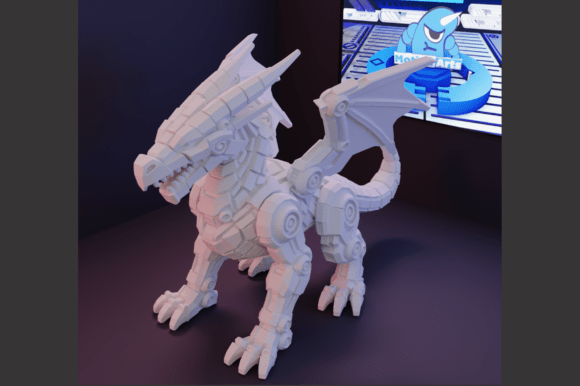
The core attraction of the Robot Dragon lies in its hybrid design language. Unlike traditional dragon models that focus solely on scales, wings, and organic musculature, this model integrates mechanical components such as pistons, plating, vents, and exposed wiring. This "mecha-organic" style appeals to enthusiasts of cyberpunk, steampunk, and hard science fiction genres. The design does not merely slap metal plates onto a lizard shape; rather, it reimagines the anatomy of the dragon through an engineering lens.
Key visual elements include:
- Mechanical Articulation: Joints are depicted as hydraulic or servo-driven mechanisms, adding realism to the pose.
- Textural Contrast: The model balances smooth metallic surfaces with intricate grilles and rugged armor plating, providing varied opportunities for post-processing and painting.
- Imposing Silhouette: The proportions are designed to convey power and grandeur, making it suitable as a centerpiece for dioramas or display shelves.
For artists and painters, this level of detail is crucial. It allows for advanced techniques such as weathering, dry brushing, and metallic finishing, which can significantly enhance the perceived value of the final print. The design encourages creativity in color schemes, ranging from polished chrome and gold to rusted iron and battle-worn steel.
Technical Specifications and Printability
A visually striking model is only valuable if it can be printed successfully. The Robot Dragon STL file is optimized for most consumer-grade 3D printers, but users must consider their hardware capabilities. The model features overhangs, fine details, and potentially complex internal structures that require careful slicer settings.
Compatibility with FDM and SLA Printers
Fused Deposition Modeling (FDM): Users with filament-based printers should expect to use support structures extensively. To preserve the mechanical details, a nozzle size of 0.4mm or smaller is recommended. Layer height should be minimized (0.1mm–0.15mm) to capture the finer textures of the robotic components. Infill density may need adjustment depending on whether the model is intended for display or handling.
Stereolithography (SLA/DLP): Resin printers are ideally suited for this model due to their high resolution. The Robot Dragon’s intricate mechanical parts benefit from the smooth surface finish and precision of resin printing. However, users must ensure proper orientation to minimize support marks on visible surfaces and prevent warping during the curing process.
File Integrity and Preparation
The STL file is provided in a standard format compatible with major slicing software such as Cura, PrusaSlicer, and Chitubox. Before printing, it is advisable to inspect the mesh for non-manifold edges or holes, although reputable designers typically ensure watertight models. Scaling options allow users to adjust the size according to their needs, whether creating a miniature for tabletop gaming or a large-scale decorative piece.
Practical Applications and Use Cases
The versatility of the Robot Dragon extends beyond simple decoration. Its design supports multiple use cases across different hobbies and professional fields.
- Collectible Display Pieces: For fans of sci-fi and fantasy, a well-printed and painted Robot Dragon serves as a high-impact display item. Its unique aesthetic distinguishes it from mass-produced figurines, offering a sense of exclusivity and craftsmanship.
- Tabletop Gaming Miniatures: While scale may vary, the model can be adapted for role-playing games set in futuristic or magi-tech worlds. It can serve as a boss monster, a guardian entity, or a mechanical mount for player characters.
- Diorama and Set Design: Filmmakers, photographers, and hobbyists building sci-fi scenes can use the Robot Dragon as a focal point. Its mechanical nature allows it to blend seamlessly with other industrial or futuristic props.
- Educational Demonstrations: Educators teaching 3D modeling, printing, or robotics can use this model to discuss complex geometry, support strategies, and the fusion of biological and mechanical design principles.
Target Audience and Value Proposition
Who benefits most from acquiring the Robot Dragon STL file? The primary audience includes:
- Experienced 3D Printing Hobbyists: Individuals looking for challenging prints that test their skills in support removal, sanding, and painting.
- Content Creators: YouTubers, bloggers, and social media influencers who need visually engaging subjects for time-lapse videos, reviews, or artistic showcases.
- Game Masters and Designers: Those running sci-fi/fantasy hybrid campaigns who require unique assets to enhance immersion.
- Interior Decor Enthusiasts: People seeking distinctive, conversation-starting decor items that reflect an interest in technology and mythology.
The value proposition lies in the exclusivity and customization potential. Unlike generic models available on free repositories, this specialized design offers a curated aesthetic that saves designers hours of modeling time. For professionals, this efficiency translates into faster project turnaround and higher-quality outputs.
Limitations and Considerations
While the Robot Dragon offers significant advantages, potential buyers should be aware of certain limitations. First, the complexity of the design means it is not ideal for beginners. Novice users may struggle with support removal and achieving clean details without extensive post-processing. Second, printing time and material consumption can be high, especially at larger scales. Users should calculate costs accordingly to ensure the project remains budget-friendly.
Additionally, the mechanical aesthetic may not fit all thematic contexts. If your project requires a purely organic or historical fantasy look, this model’s robotic elements may clash with the desired tone. Always consider the narrative or visual consistency of your broader collection or project before committing to this specific design.
Final Assessment
The Robot Dragon STL file stands out as a robust resource for those interested in the convergence of technology and fantasy. Its detailed mechanical design, compatibility with various printing technologies, and versatile application possibilities make it a worthwhile addition to any digital library. For creators willing to invest the time in printing and finishing, the result is a striking piece that embodies the power of modern fabrication tools.
Whether used for personal enjoyment, professional portfolios, or educational purposes, this model demonstrates the potential of 3D printing to bring imaginative concepts to life. By understanding its technical requirements and aesthetic strengths, users can maximize the value of their print and create a truly impressive futuristic legend.