Evaluating the 2026 Text Effect on Wave Background for Modern Digital Design
As designers and marketers prepare their visual strategies for the upcoming year, the demand for forward-looking aesthetics has intensified. One specific asset gaining traction is the 2026 Text Effect on Wave Background. This design element combines bold, three-dimensional typography with fluid, dynamic backgrounds to create a sense of motion and futurism. For professionals aged 20 to 50 who are curating resources for branding, social media campaigns, or event promotions, understanding the utility and limitations of this specific style is crucial. It is not merely a decorative choice but a strategic tool for conveying innovation and momentum.
Defining the Aesthetic: Bold 3D Typography Meets Fluid Dynamics
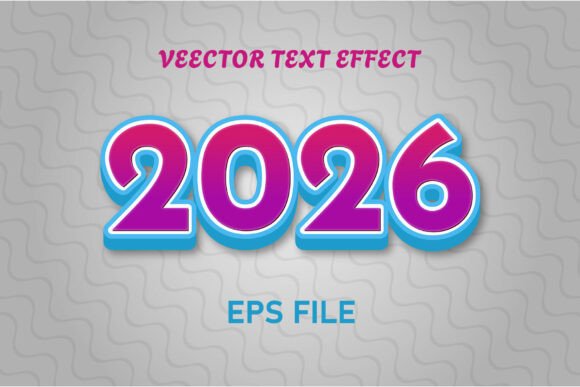
The core appeal of the 2026 Text Effect on Wave Background lies in its juxtaposition of solidity and flow. The text itself is typically rendered in a heavy, sans-serif font, extruded to create depth. This bold 3d text design for the year 2026 serves as the anchor of the composition. It is often filled with vibrant gradients—shifting from electric blues to neon purples or warm sunset oranges—which catch the light and emphasize the three-dimensional form. An outline further defines the letters, ensuring legibility even against complex backgrounds.
Beneath this solid typography lies the wave background. Unlike static geometric patterns, waves suggest continuous movement, adaptability, and energy. When combined, the rigid structure of the "2026" numerals contrasts sharply with the organic curves of the background. This visual tension captures attention immediately. For businesses launching new products or services in 2026, this aesthetic communicates that they are both stable (the bold text) and agile (the wave).
Technical Specifications and File Versatility
When evaluating design assets, technical flexibility is as important as visual appeal. A high-quality 2026 Text Effect on Wave Background package should offer more than a single flattened image. Professional-grade resources typically include multiple file formats to accommodate various workflows. For instance, an EPS file allows for infinite scalability without loss of quality, making it ideal for large-format printing such as banners or trade show displays. Compatibility with CS6 ensures that designers using older versions of Adobe Illustrator can still edit the vector paths, adjust colors, or modify the gradient fills.
Additionally, including a high-resolution JPG provides a ready-to-use option for digital platforms where editing is not required. This dual-format approach saves time for social media managers who need quick uploads while offering creative control for graphic designers who need to integrate the text into broader brand guidelines. The inclusion of these formats indicates a resource designed for practical, real-world application rather than just conceptual showcase.
Comparing Wave Backgrounds to Alternative Design Trends
To determine if this style fits your project, it is helpful to compare it with other prevalent design trends. While minimalism has dominated the early 2020s, focusing on whitespace and flat colors, the 2026 Text Effect on Wave Background represents a shift toward maximalism and depth. Here is how it stacks up against common alternatives:
- Flat Design vs. 3D Depth: Flat design is clean and loads quickly on websites, but it can sometimes feel generic or lack emotional impact. The 3d text design offers a tactile quality that feels premium and engaging, though it requires more careful handling to avoid visual clutter.
- Geometric Patterns vs. Organic Waves: Geometric backgrounds convey order and precision, suitable for financial or legal sectors. In contrast, the wave background suggests creativity, technology, and fluidity, making it better suited for tech startups, entertainment, and lifestyle brands.
- Static vs. Dynamic Implication: Even in a static image, the wave effect implies motion. This is distinct from static solid-color backgrounds, which serve as neutral canvases. If your goal is to energize the viewer, the wave effect is superior; if your goal is to calm or neutralize, a solid background may be preferable.
Strategic Use Cases and Best-Fit Scenarios
Understanding when to deploy this asset is key to maximizing its return on investment. The 2026 Text Effect on Wave Background is particularly effective in scenarios where you need to announce something new or highlight a timeline. Consider the following applications:
- New Year Campaigns: As the name implies, this is tailor-made for welcoming 2026. It works exceptionally well for corporate greeting cards, email headers, and social media posts celebrating the start of the fiscal or calendar year.
- Tech Product Launches: The futuristic gradient and 3D styling align well with software updates, hardware releases, or AI innovations. The visual language speaks to progress and next-generation capabilities.
- Event Branding: For conferences or festivals scheduled in 2026, this design can serve as the primary logo lockup or stage backdrop. The bold lettering ensures visibility from a distance, while the vibrant colors create an energetic atmosphere.
However, there are situations where this style may not be appropriate. For industries requiring strict conservatism, such as traditional banking or healthcare compliance, the vibrant gradients and playful waves might appear too informal. In these cases, a more subdued typographic treatment with a neutral background would maintain professional credibility.
Limitations and Design Tradeoffs
While visually striking, the 2026 Text Effect on Wave Background comes with certain tradeoffs that designers must manage. The primary challenge is legibility. Because the text features complex gradients and sits atop a patterned background, there is a risk of reduced readability if the contrast is not carefully managed. Designers must ensure that the outline around the text is sufficiently distinct from the wave colors behind it.
Another consideration is trend longevity. Specific year-based designs have a natural expiration date. While the aesthetic elements—3D text and waves—may remain popular, the explicit reference to "2026" limits the asset's shelf life to that specific year. Therefore, this resource is best viewed as a tactical tool for short-term campaigns rather than a long-term brand identity element. Investing in editable files like EPS allows for some adaptation, but the core message remains time-bound.
Making an Informed Decision
Choosing the right visual assets involves balancing aesthetic appeal with functional requirements. If your objective is to create a vibrant, stylized representation that captures attention and conveys modernity, the 2026 Text Effect on Wave Background is a strong candidate. Its combination of bold 3d text design and fluid backgrounds offers a contemporary look that resonates with adult audiences accustomed to high-quality digital experiences.
Before downloading or purchasing, assess your technical needs. Do you require vector editing capabilities? If so, verify that the EPS and CS6 compatibility meet your software standards. If you only need quick digital content, the JPG format may suffice. Additionally, consider your brand voice. Does the energy of the wave and the boldness of the 3D text align with your message? If you aim to project innovation, energy, and forward-thinking values, this design element provides a ready-made solution that reduces production time while maintaining high visual standards.
Ultimately, the value of this asset lies in its versatility and immediate impact. By understanding its strengths in capturing attention and its limitations regarding trend specificity, you can integrate it effectively into your 2026 marketing mix. Whether used for a headline graphic, a presentation cover, or a social media announcement, it serves as a powerful visual shorthand for the future.